Posts

The Boxer Rebellion 1899-1901: Eight Nation Alliance and the Bloody Defeat of the Chinese Boxer 'Braves'

Image
The Boxer rebellion is a most fascinating conflict to study because of the unique nature of the conflict amongst many other notable conflicts fought at the very end of the 19 th century and into the early 1900's. Many histories written in modern times have highlighted the international diplomatic and military effort's of the Eight Nation Alliance which was arguably the first modern age military coalition force of its kind. Allied armies attack the Peking (Beijing) palace during the Boxer Rebellion 1900 Their enemy, the mystic Chinese ‘Boxer’ rebels (nationalists) of the Society of ‘Righteous Harmonious Fists’, fundamentalists patriots who were fighting to expel "Western" allied influence (Austria-Hungary, France, Germany, Italy, Russia, the United Kingdom, and the United States, and Japan) from China. A conflict marked by bloody insurrections, atrocities, and costly sieges, the Boxer Rebellion of 1899-1901 is a critical study in early-modern world diplomacy, war...

Sir Hotspur's Uprising: The Battle of Shrewsbury, July 21, 1403

Image
See the Battle between House Percy and Clan Douglas during the Anglo-Scots border conflict: Otterburn to Homildon Hill 1388-1402  for more. The motivations behind Sir Henry Percy, known to the Scots as 'Hotspur' (b.1364-1403), transformation from loyal knight in service to the realm regardless of whom was sitting on the throne in Westminster into a rebel and attainted traitor looking to kill his lawful king in battle, were complex. There is still some doubt historically as to exactly what Hotspur looked to accomplish in his rising. Certainly a catalyst for Hotspur's rebellion was a reaction to a society in both himself and his father were apart of. This hegemony and societal structure defined by the tenets of feudal service in the age of chivalry (coming to an end by the mid 1400's), amidst the violent life of the Anglo-Norman knight. Death of Hotspur on the field at Shrewsbury Both henry and his father the Earl of Northumberland expected titles, a moderately high salar...

War on the Scottish Border: The Battles of Otterburn & Homildon Hill, 1388-1402

Image
The violent life of the medieval knight and men-at-arms was defined by the societal structures of feudalism, crucial to the early periods of Anglo-Scottish conflict from the First Edwardian War (1296-1328) into the start of the 15th century when the English turned their attention to the kingdom of the Scots yet again. Especially true during King Edward I’s early reign when the major battles of the Scottish War of Independence were being decided in 1296-1314, ending with the Treaty of Northampton in the year 1328 which made Robert the Bruce (b.1274-1329), Robert I, King of Scots. [1] King Robert the Bruce, slays the English knight Sir Henry De Bohun at the Battle of Bannockburn in 1314 Shortly the signing of the treaty in a letter dated July 1328, King Robert sent a letter to Henry de Percy, second Baron of Alnwick [2] (b.1299-1351) affirming Baron de Percy and his heirs their rightful claim to the southern territories of the Scottish Kingdom. Of the several notable Scottish knights wh...

Cavalry in the American Civil War: A Brief Overview, 1861-1865

Image
The influence of the American Civil War 1861-1865, on all three major aspects of tactical warfare in the 19 th century; land, naval, and logistical strategies, is one of the great studies in warfare from the 16 th -19 th centuries. In popular history and memory, the cavalry of both North and South, fighting from Pennsylvania, to farthest reaches of American territory in the West, have become and almost an unmatched icon of American military history from the period 1800-circa 1900. General Philip Sheridan rallying the Union Army at the Battle of Third Winchester (Opequon), a critical battle in the Shenandoah Valley campaign of 1864, which helped Lincoln win re-election Cavalry played an integral role in the Civil War and in many of its battles though their role in pitched battles, on open terrain battlefields was relatively marginalized due to technological breakthroughs in weaponry, the horse soldiers’ role as irregular, raider, pillager, and guerrilla force was one of the most disti...

Greco-Italian War of 1940-1941

Image
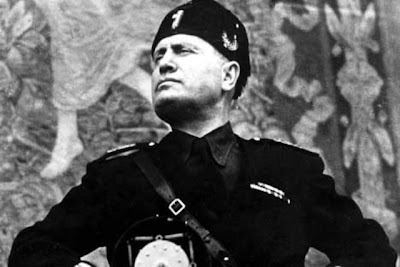
On this day in history 1940, during the early years of World War II, Il Duce Benito Mussolini’s (b.1883-1945) government declared war on Greece, starting the Italo-Greek War. This conflict would become the earliest front in the Greek campaign of the greater Mediterranean-North African campaign between by fascist Italy, Nazi Germany, and the Allies, principally Britain and her Commonwealth allies. Il Duce Benito Mussolini Using a massive invasion force of eight divisions, well over 200,000 men with full compliments of artillery, armor, and the warplanes of the Regia Aeronautica, which were launched from Albania , the Italians made an unexpected move towards war against the greater strategic aims of the Axis powers in October 1940. Most certainly Mussolini and his upper-echelon military generals realized that they must act alone in large scale military operation without the aid of Nazi Germany, so that their Axis allies and the enemies of Italy took them as a serious threat in the comin...