Posts

Showing posts with the label Italy

Odd Fighting Units: Italian Frogmen and the Human Torpedoes of the Decima Flottiglia MAS, 1940-1943

Image
The Decima Flottiglia MAS (Decima Flottiglia Mezzi d'Assalto) known as La Decima or Xª MAS, the Italian 10th Assault Vehicle Flotilla was an elite naval unit active in World War from 1940-1945. This elite brigade of frogmen, sailors, and naval commandos most renowned service came between 1941-1943 when they undertook an ultimately failed but rather costly campaign against Allied military vessels and commerce shipping in the Mediterranean. Artist Depiction of Italian  Regia Marina  Frogmen, c.1941 When examining the impact that the Italian 10th MAS had during its years of service for Benito Mussolini’s (b.1883-1945) government from 1940-1943, one must understand the diverse composition of the brigade itself. Essentially four different branches comprised the unit during its fight against the British Royal Navy and Allied shipping, the Gamma frogmen, manned torpedo craft, midget submarines, and assault motorboat craft. Early Development of the Italian Assault Flotillas, 1917-1940...

The Boxer Rebellion 1899-1901: Eight Nation Alliance and the Bloody Defeat of the Chinese Boxer 'Braves'

Image
The Boxer rebellion is a most fascinating conflict to study because of the unique nature of the conflict amongst many other notable conflicts fought at the very end of the 19 th century and into the early 1900's. Many histories written in modern times have highlighted the international diplomatic and military effort's of the Eight Nation Alliance which was arguably the first modern age military coalition force of its kind. Allied armies attack the Peking (Beijing) palace during the Boxer Rebellion 1900 Their enemy, the mystic Chinese ‘Boxer’ rebels (nationalists) of the Society of ‘Righteous Harmonious Fists’, fundamentalists patriots who were fighting to expel "Western" allied influence (Austria-Hungary, France, Germany, Italy, Russia, the United Kingdom, and the United States, and Japan) from China. A conflict marked by bloody insurrections, atrocities, and costly sieges, the Boxer Rebellion of 1899-1901 is a critical study in early-modern world diplomacy, war...

Greco-Italian War of 1940-1941

Image
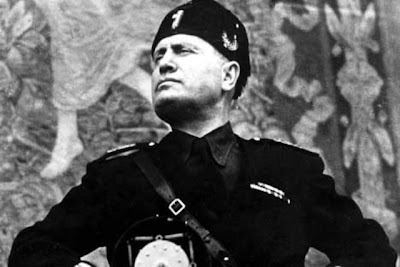
On this day in history 1940, during the early years of World War II, Il Duce Benito Mussolini’s (b.1883-1945) government declared war on Greece, starting the Italo-Greek War. This conflict would become the earliest front in the Greek campaign of the greater Mediterranean-North African campaign between by fascist Italy, Nazi Germany, and the Allies, principally Britain and her Commonwealth allies. Il Duce Benito Mussolini Using a massive invasion force of eight divisions, well over 200,000 men with full compliments of artillery, armor, and the warplanes of the Regia Aeronautica, which were launched from Albania , the Italians made an unexpected move towards war against the greater strategic aims of the Axis powers in October 1940. Most certainly Mussolini and his upper-echelon military generals realized that they must act alone in large scale military operation without the aid of Nazi Germany, so that their Axis allies and the enemies of Italy took them as a serious threat in the comin...

Achtung Panzer in Spanien! The Condor Legion's infantry contingent and the Bombing of Guernica in 1937

Image
Condor Legion in Spain, Part I Further military intervention in the Spanish Civil War involving the  Condor Legion began in January of 1937 with the Imker-Drohne (Armor) and Imker-Ausbilder (Infantry) landing in Spain. Very soon they would they take a prominent role in training the fascist Spaniards cadres of officers and enlisted men. They would  participate actively in the ground campaign as well while preparing for the eventual drive into the heart of Spain led by Franco's rebels and the battle hungry Italians . This runs contrary to the belief that German involvement in Spain was solely for the testing and experimentation of tactics and equipment, especially armor and aviation technologies which though developed intensively before in the inter-war were untested in any large scale combat operations. Condor Legion banner/marching standard Tank commanders in the Wehrmacht simply learned the tactics as they went along by trial and error, with their collective experiences in...

Condors Over Spain: The Luftwaffe's intervention in the Spanish Civil War, 1936-1939

Image
The Spanish Civil War though complex in origin can be traced to the Spanish Empire’s collapse in 1931 and its monarch King Alfonso XIII abdication, which were peaceful affairs. The Spanish Civil War which would begin in 1936 however, would be a devastating and bloody preview of the type of modern warfare coming that was to be unleashed throughout Europe after the invasions of Poland September-August 1939. The intervention of military forces from Nazi Germany and Mussolini's Italy, particularly the aerial forces of the German Condor Legion, showcased the new deadly possibilities of aerial warfare on the civilian populace of, thinking regionally, a European nation. Long before the crisis of abdication, Spain had been ruled by a military dictator, the aristocratic general Miguel Primo de Rivera (d.1930) who came to power during the Rif War . Another critical event in the increased amount of anti-government resistance before the Civil War from the lef...

Spartacus' War: The Great Roman Gladiator Revolt, 73-71 BC

Image
Of the great wars that the Roman Republic & its Legions fought, one of the most memorable and culturally importantly in the modern age is the revolt of Spartacus and his gladiators in 73-71 BC. Spartacus and his diverse rebel legion of slaves, prisoners-of-war, peasants, and former gladiators terrorized Southern Italy in a bloody revolt, eventually threatening the security and the pride of Rome itself. Known as the Gladiator War   and also the T hird Servile War   in relation to the two other preceding major slave revolts in Sicily 135-132 BC and in 104-110 BC, the war which Spartacus brought to the doorstep of Rome itself was significant because not only was it fought on the Roman mainland, it threatened the existence (in theory) of the Roman Empire. Indeed one of the most sacred institutions of Roman culture up to this point in history of Rome, the gladiator, threatened to destroy its own creator and benefactor in one armed slave revolt. A 19th centur...